Different hair concerns call for different kinds of support.
Cosmetic care can cleanse the scalp, improve moisture and manageability, and help protect strands from avoidable stress. Nutrition and wellness choices play a separate role. Begin with what you are observing, then build a routine in which every step has a clear purpose.
Start at the root
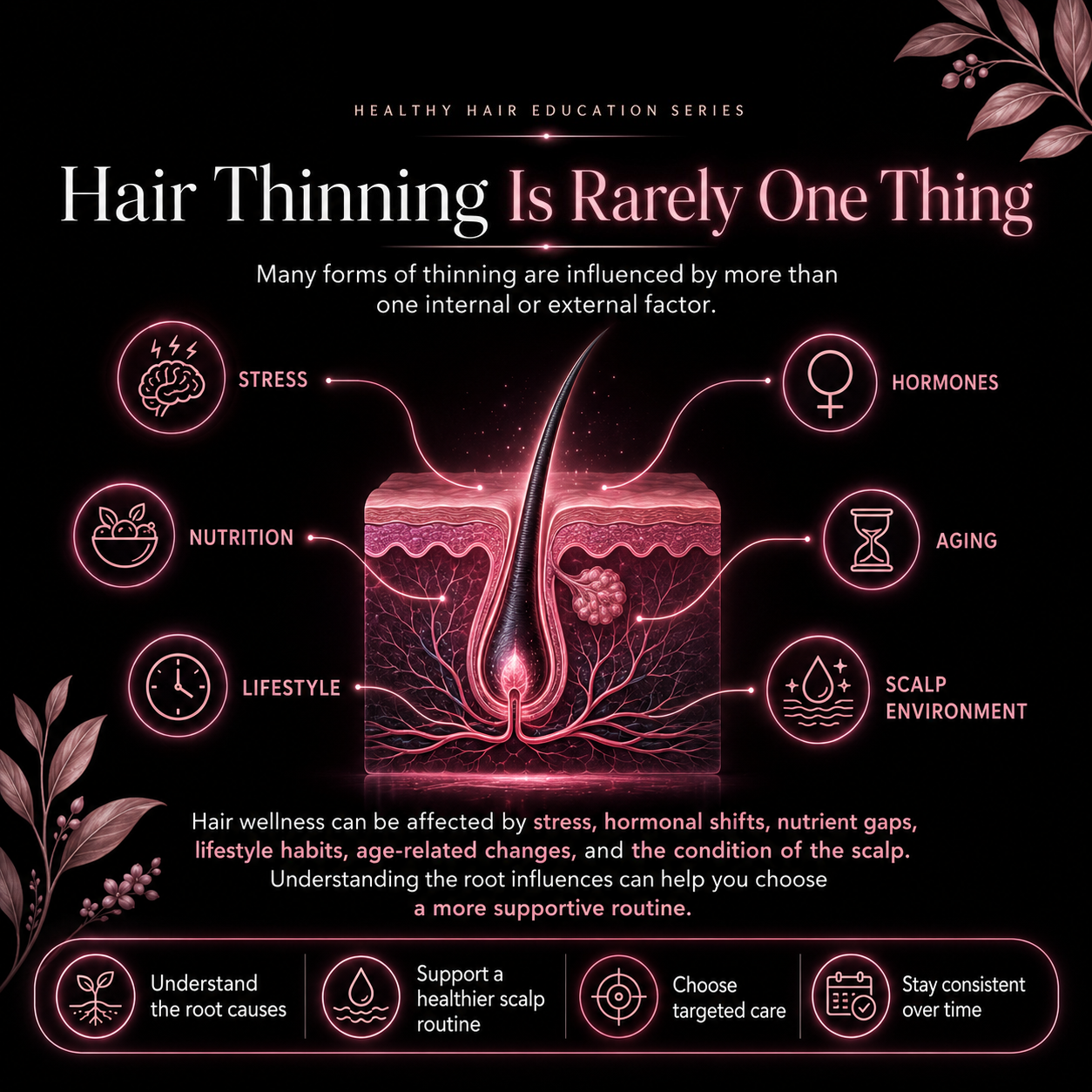
Hair thinning is rarely one thing.
Stress, hormonal shifts, nutrient gaps, lifestyle habits, age-related changes, and the condition of the scalp may overlap. Understanding those influences helps replace a one-size-fits-all response with a more supportive plan.
Exact artwork from the underlying-causes section of Koriem.net.
When your journey is more complicated
Medication, restricted intake, rapid change, and health concerns can overlap.
Hair thinning or increased shedding may appear during a complicated wellness journey. Prescription medications—including GLP-1 therapies—do not affect everyone the same way, and they should never be stopped or changed without the prescriber. Reduced appetite, nausea, food restrictions, rapid weight change, illness, surgery, hormonal shifts, and emotional stress can also reduce intake or place added stress on the hair cycle.
01
Restrictive-diet nutrient gaps
Eating less—or avoiding entire food groups—can make it harder to obtain enough protein, iron, zinc, vitamin D, B vitamins, essential fats, and overall energy. A deficiency can only be identified appropriately through health history, dietary review, and testing when indicated.
02
GLP-1 and medication-related challenges
GLP-1 medicines commonly reduce appetite, and gastrointestinal effects may further limit food intake for some people. Hair changes reported during weight-loss treatment may relate to rapid weight change, lower intake, illness, stress, or another cause—not necessarily a direct drug effect.
03
Lower energy availability
A sustained calorie deficit gives the body less incoming fuel. Energy expenditure and food-related heat production can adapt downward, while the body prioritizes essential functions. That does not prove “metabolic damage,” but it makes nutrient-dense meals, adequate protein, and professional monitoring especially important.
04
The hair cycle may respond later
Diffuse shedding can become noticeable weeks or months after rapid weight loss, illness, surgery, major stress, or inadequate intake. New bald patches, scalp symptoms, or persistent and progressive thinning require evaluation rather than self-treatment.
Designed to support—not replace—nutrition
Choose support around the verified need.
Food comes first. Koriem formulas can complement a clinician-guided plan, but no product corrects an undiagnosed deficiency, replaces adequate calories or protein, or treats medication-related hair loss.
Collagen Peptide Powder + Gut Support
Provides 10 g marine collagen peptides plus vitamin C, vitamin B5, zinc, amino acids, hyaluronic acid, inulin, and a gut-supporting microbial ingredient. It is not a complete protein or meal replacement and contains fish and high-dose biotin.
Offers broad vitamin and mineral support, OptiMSM®, collagen, MCTs, and botanicals for customers seeking a daily beauty-wellness formula. It contains high-dose biotin and should be reviewed before laboratory testing.
Delivers two separate, biotin-free formulas with amino acids, structural nutrients, botanicals, vitamin D, zinc, selenium, folate, copper, and antioxidant-support nutrients. It contains concentrated minerals and is not an iron supplement.
Rosemary & Ginseng wash day, Vitality 11, conditioning, and gentle styling support scalp comfort, strand lubrication, and breakage-conscious retention while internal concerns are evaluated.
The cycle, the root, and the strand tell different stories.
The natural hair cycle
Growth, transition, rest, and shedding are distinct phases.
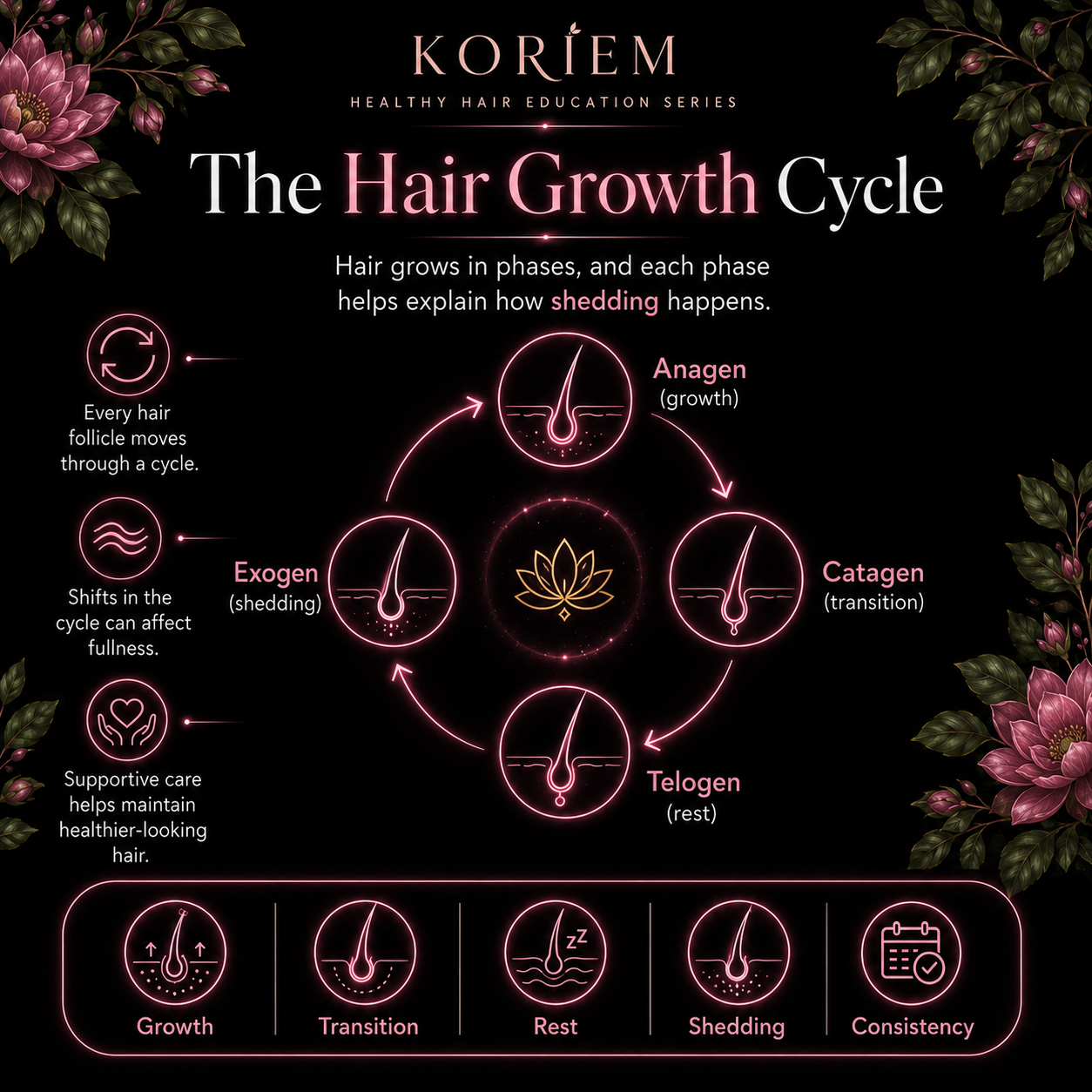
Every follicle moves through a cycle. Anagen is the active growth phase, catagen is a brief transition, telogen is the resting phase, and exogen describes release or shedding. Not every follicle is in the same phase at the same time.
Daily shedding can be part of the normal cycle.
Visible change takes time because follicles cycle independently.
Sudden or persistent changes deserve professional evaluation.
Original Koriem Healthy Hair Education Series artwork with the official logo treatment restored.
Know the source of the change
Shedding comes from the root. Breakage happens along the strand.
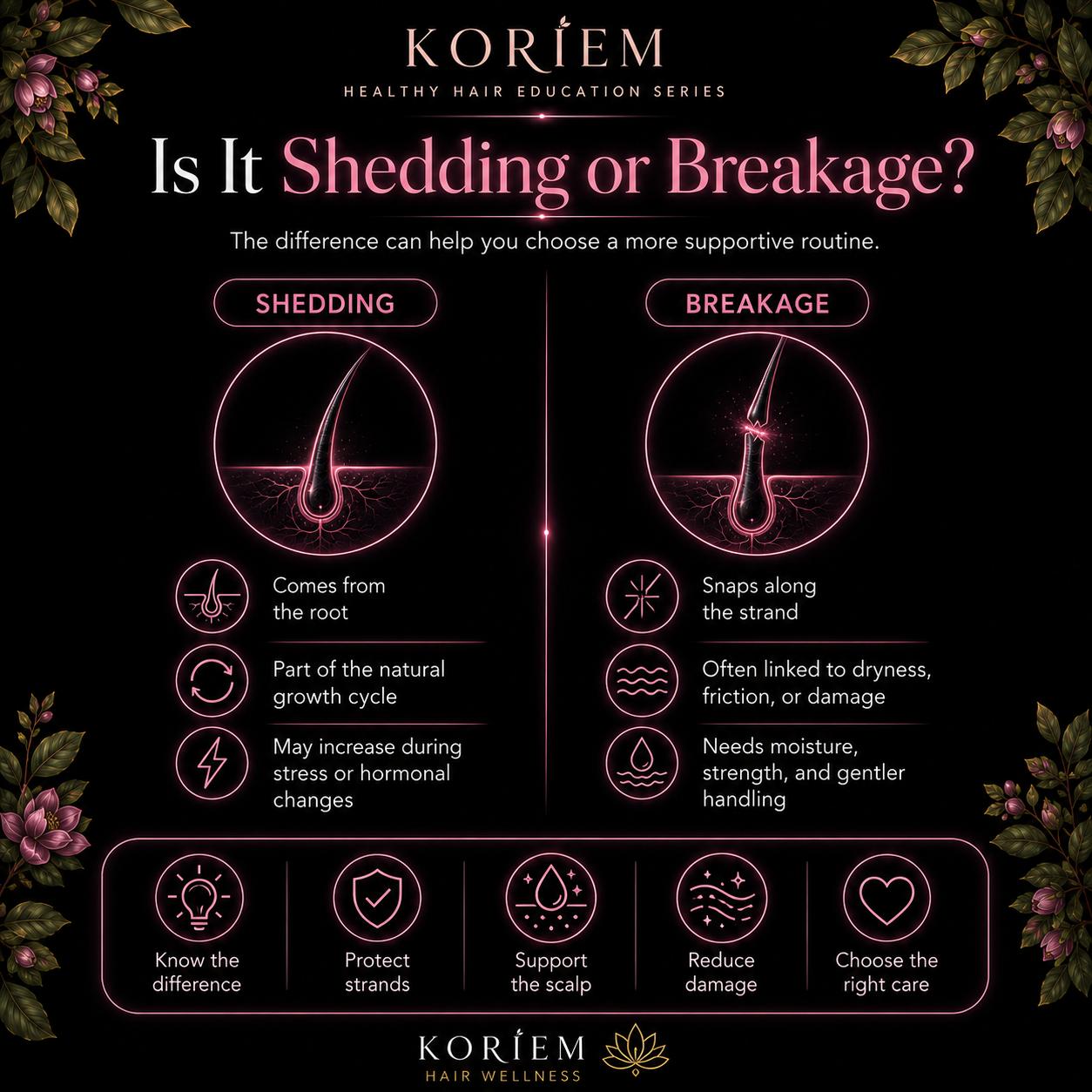
A shed hair completes a cycle and releases from the follicle. A broken hair snaps somewhere along its length, often in connection with dryness, friction, heat, chemical stress, or rough handling. The distinction changes what supportive care should focus on.
Shedding may include a full-length strand released from the root.
Breakage may appear as shorter pieces or uneven lengths.
Persistent shedding, bald areas, or scalp symptoms need clinical attention.
Original Koriem Healthy Hair Education Series artwork with the official logo treatment restored.
Wellness transition · Hormonal shifts
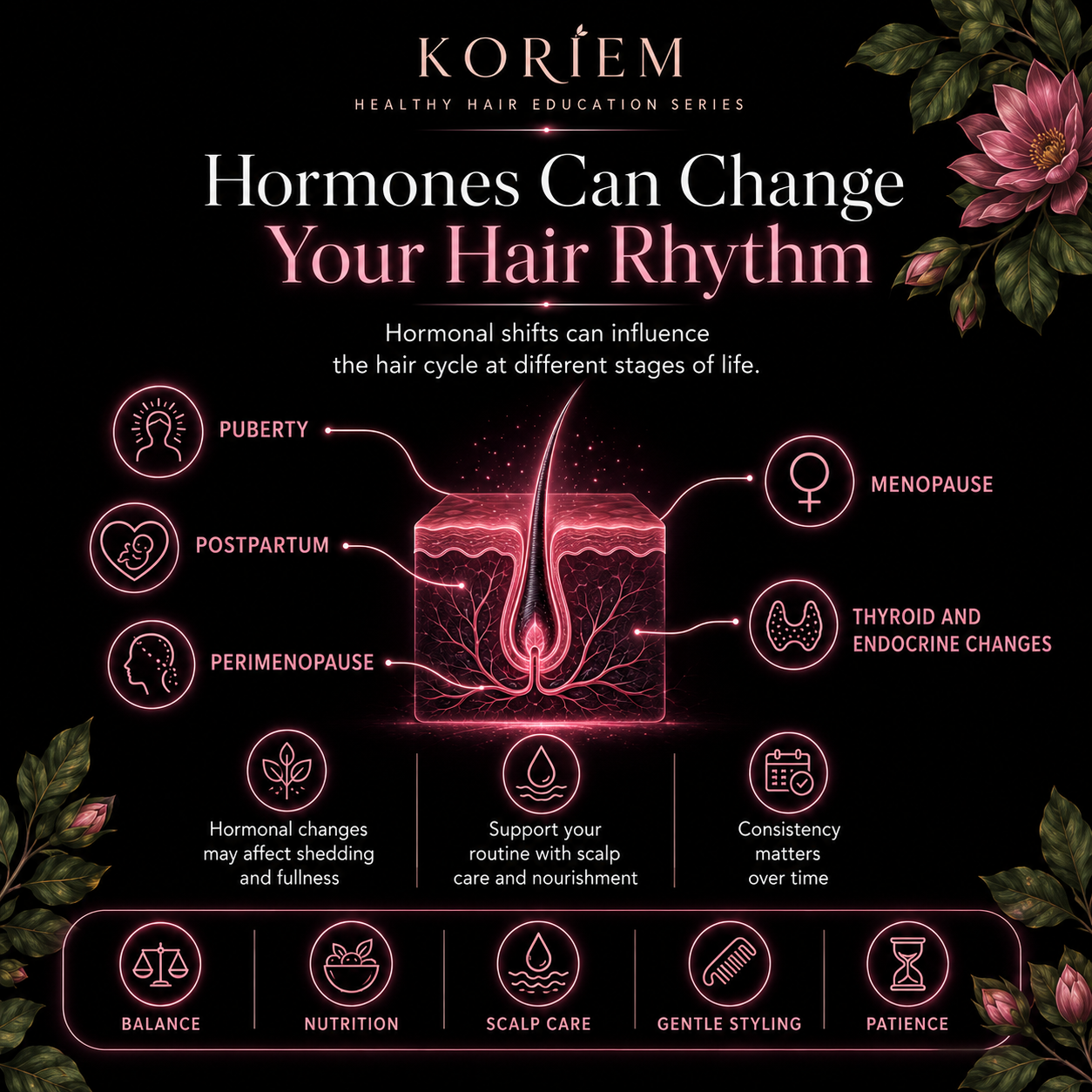
Hormones can influence the hair rhythm at different life stages.
Puberty, postpartum changes, perimenopause, menopause, thyroid-related changes, and other endocrine transitions may affect fullness, texture, or shedding. Cosmetic care can support comfort and gentle handling, while a qualified clinician evaluates the underlying cause.
Keep scalp and strand care gentle during periods of change.
Avoid assuming every hormonal concern needs the same routine.
Ask for professional guidance when changes are sudden or concerning.
Original Koriem Healthy Hair Education Series artwork with the official logo treatment restored.
Wellness transition · Stress
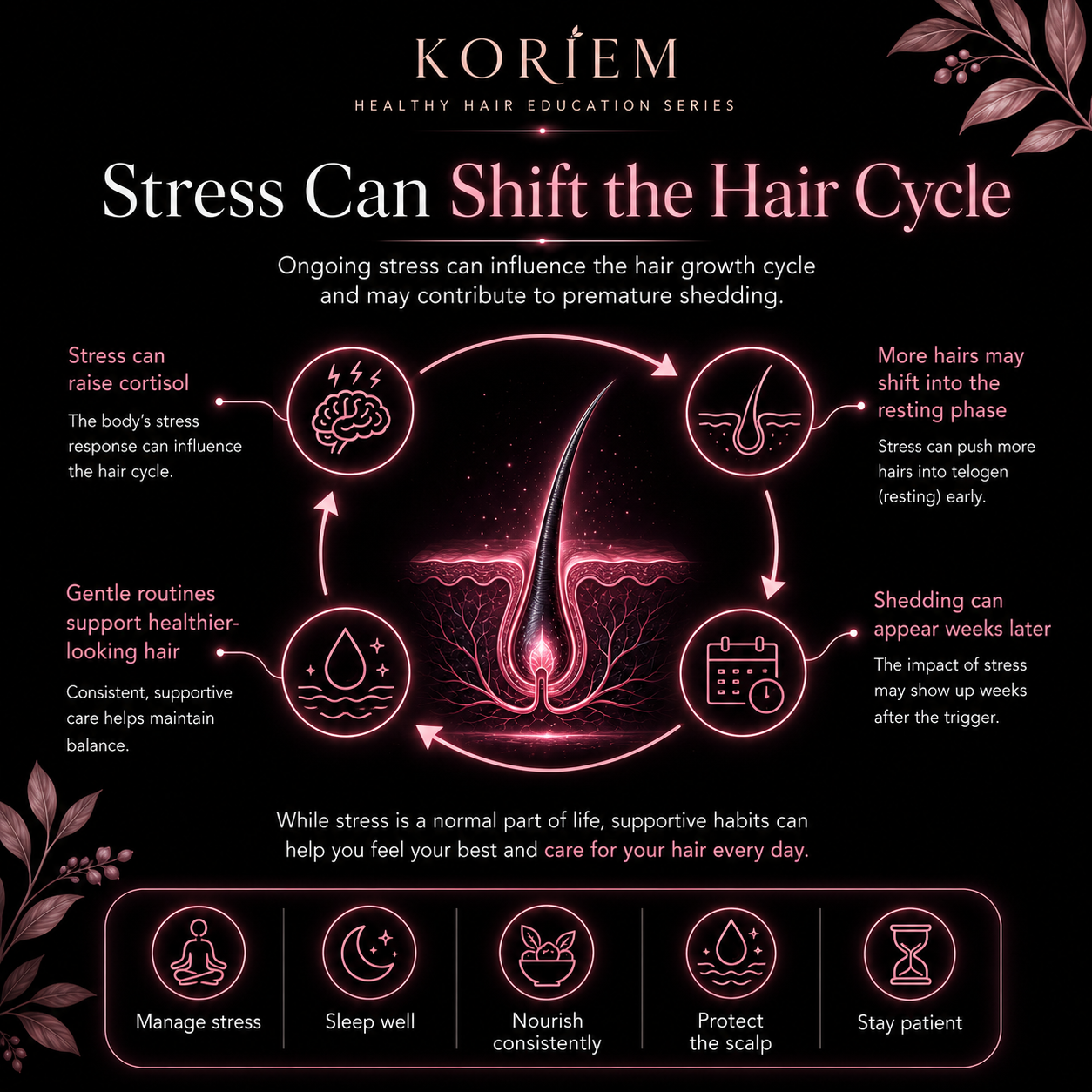
Stress can shift what you notice in the hair cycle.
Physical or emotional stress may influence the cycle, and visible shedding can appear after the original trigger. A supportive routine cannot remove the cause, but it can make daily care gentler and more consistent while the wider concern is addressed.
Use low-tension, low-friction styling where possible.
Protect sleep, nourishment, recovery, and scalp comfort.
Give delayed or persistent shedding appropriate medical attention.
Original Koriem Healthy Hair Education Series artwork with the official logo treatment restored.
DHT · Hormonal change · Stress · Environment
Understand the signal before choosing the support.
Hair changes can involve internal signals, the hair cycle, nutrition, scalp condition, environmental exposure, and daily handling. Koriem products can support healthy hair growth, synthesis, retention, and the appearance of stronger hair—but they are not substitutes for diagnosis or prescription treatment.
DHTDihydrotestosterone
What is DHT?
DHT is an androgen made when the enzyme 5-alpha-reductase converts testosterone. In genetically susceptible scalp follicles, androgen signaling can contribute to gradual follicle miniaturization and pattern hair thinning. DHT is also a normal hormone with functions elsewhere in the body, so “blocking DHT” is a medical-treatment claim—not a casual cosmetic promise.
When to seek help: A widening part, receding hairline, progressive density loss, sudden shedding, bald areas, or scalp symptoms deserve evaluation by a dermatologist or qualified healthcare professional.
01
DHT-related botanical support
Total Synthesis™ Regulator Matrix: saw palmetto extract and pumpkin seed extract are botanicals commonly discussed in DHT and 5-alpha-reductase research.
Vitality 11: saw palmetto oil and pumpkin seed oil provide topical botanical scalp care.
These Koriem formulas are not clinically established DHT blockers and are not treatments for androgenetic alopecia.02
Support during hormonal transitions
Total Synthesis™: selenium supports normal thyroid-hormone metabolism; zinc, copper, folate, vitamin D, amino acids, and structural nutrients support normal cellular and protein processes.
Hair Bloom topical care: supports scalp comfort, strand conditioning, and breakage-conscious handling while the underlying cause is professionally evaluated.
No Koriem product is presented as balancing, correcting, or regulating hormones.03
Stress-response routine support
Total Synthesis™: L-theanine is included for calm-focus support, while amino acids and micronutrients contribute to broader daily wellness.
Vitality 11 + Wash Day: massage, cleansing, conditioning, and low-friction handling create a repeatable self-care ritual during demanding periods.
Products cannot remove a stressor or treat stress-related hair loss. Visible shedding may appear after the original trigger.04
Environmental-stress support
Internal antioxidant support: selenium, copper, zinc, milk thistle, beet, and other phytonutrients contribute to normal antioxidant and cellular-defense systems.
External protection: Rosemary & Ginseng cleansing helps remove buildup; conditioners, proteins, ceramides, and botanical oils support softness, lubrication, shine, and resistance to rough handling.
“Environmental support” refers to oxidative-defense nutrition and cosmetic protection from dryness, buildup, friction, and styling—not control of the external environment.
Chapter 02 · Build supportive topical care
Cleanse the scalp. Add moisture. Handle the strand gently.
The scalp foundation
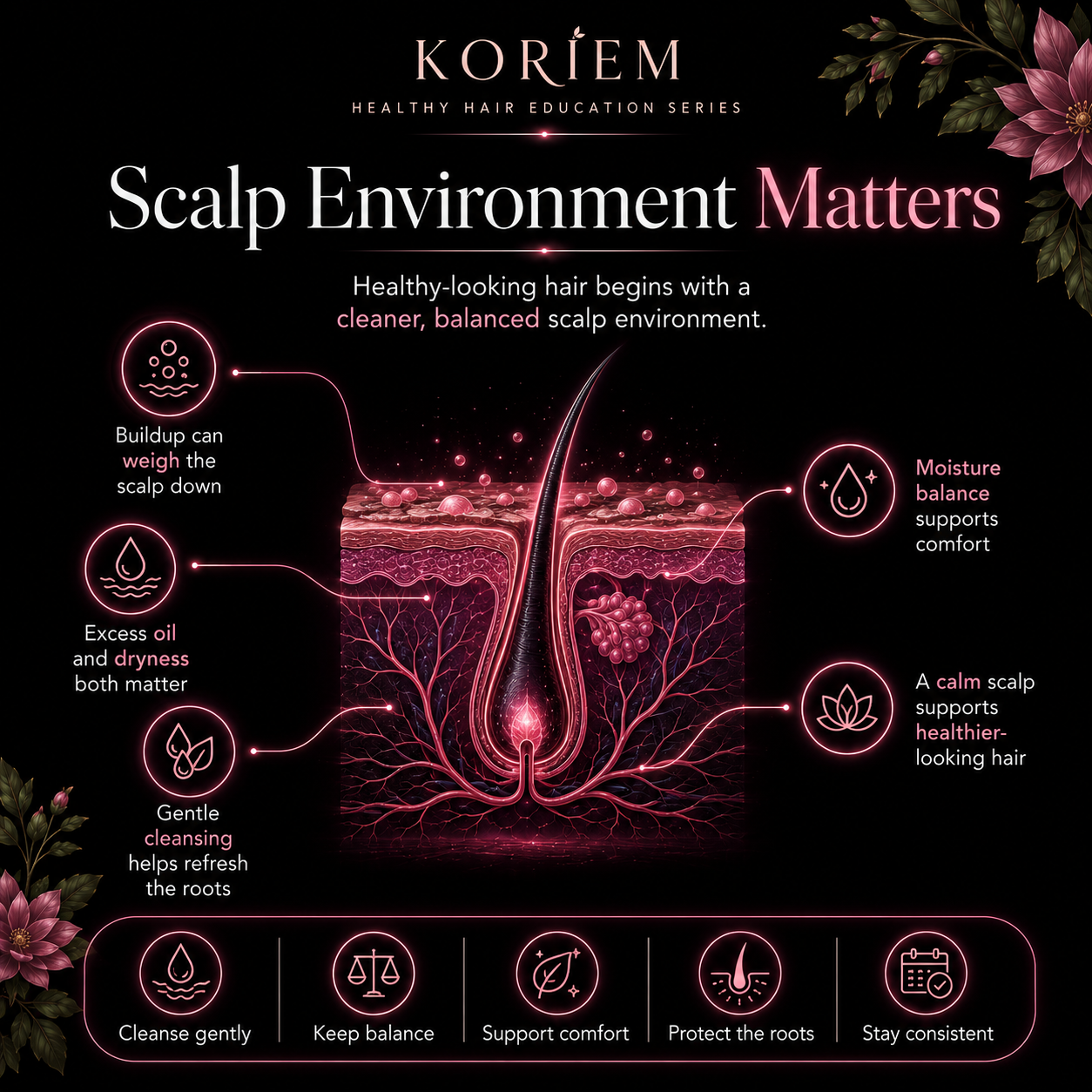
A cleaner, comfortable scalp supports a better routine.
Buildup, excess oil, dryness, and irritation can all change how the scalp feels. Gentle cleansing, thoughtful moisture balance, and routine consistency help support a comfortable, healthy-looking scalp environment.
Cleanse according to buildup, oil level, and styling habits.
Adjust scalp oils and moisturizers to your comfort.
Seek professional care for persistent itching, pain, scaling, or sores.
Original Koriem Healthy Hair Education Series artwork with the official logo treatment restored.
Dry hair vs. breakage
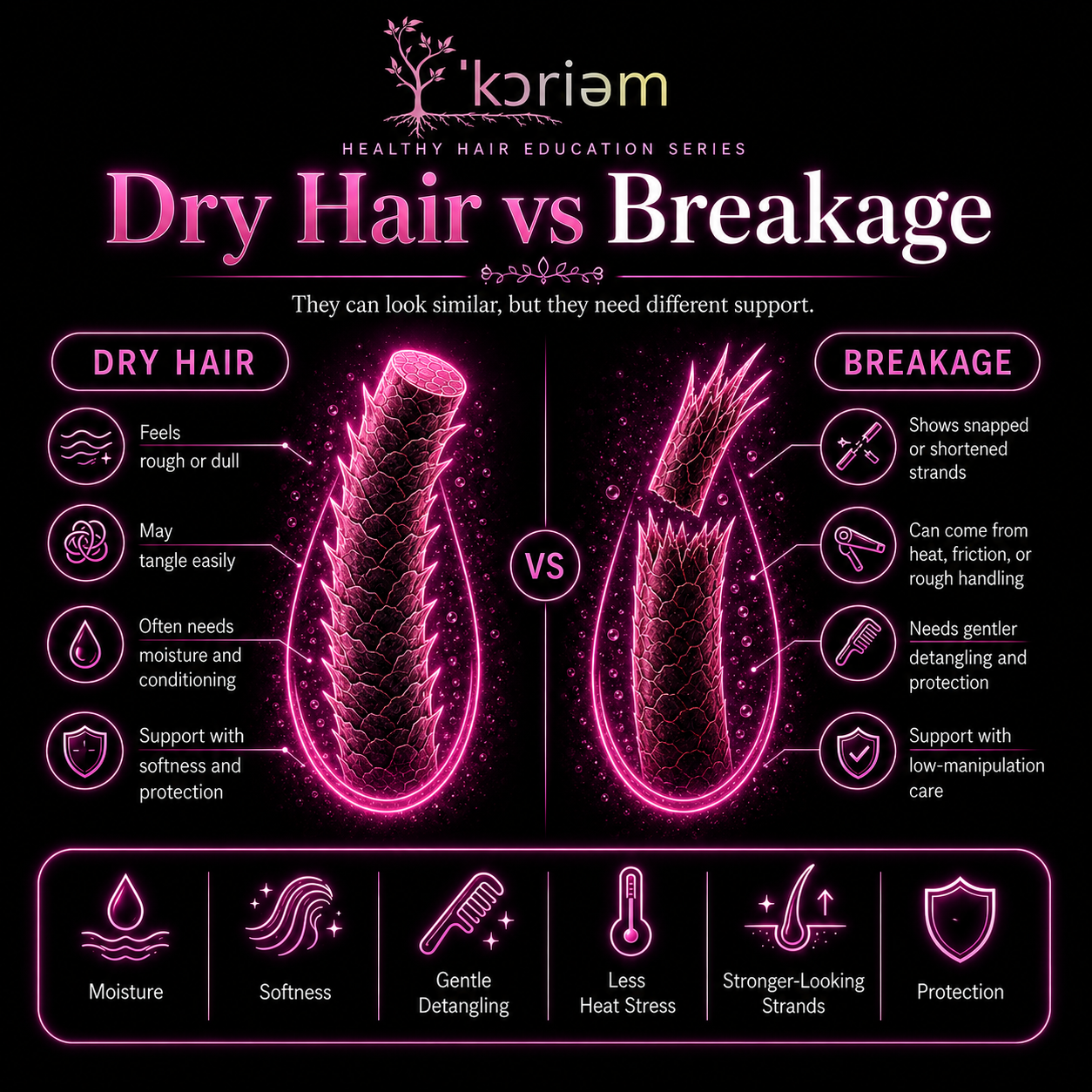
They may look related, but they need different emphasis.
Dry hair may feel rough, dull, or tangled and often benefits from conditioning and reduced moisture loss. Breakage shows as snapped or shortened strands and calls for gentler detangling, less friction, protection, and a closer look at heat or chemical stress.
Condition for softness, slip, and easier detangling.
Reduce rough handling and repeated high-heat exposure.
Trim severely split or damaged ends when needed.
Original Koriem Healthy Hair Education Series artwork with the official logo treatment restored.
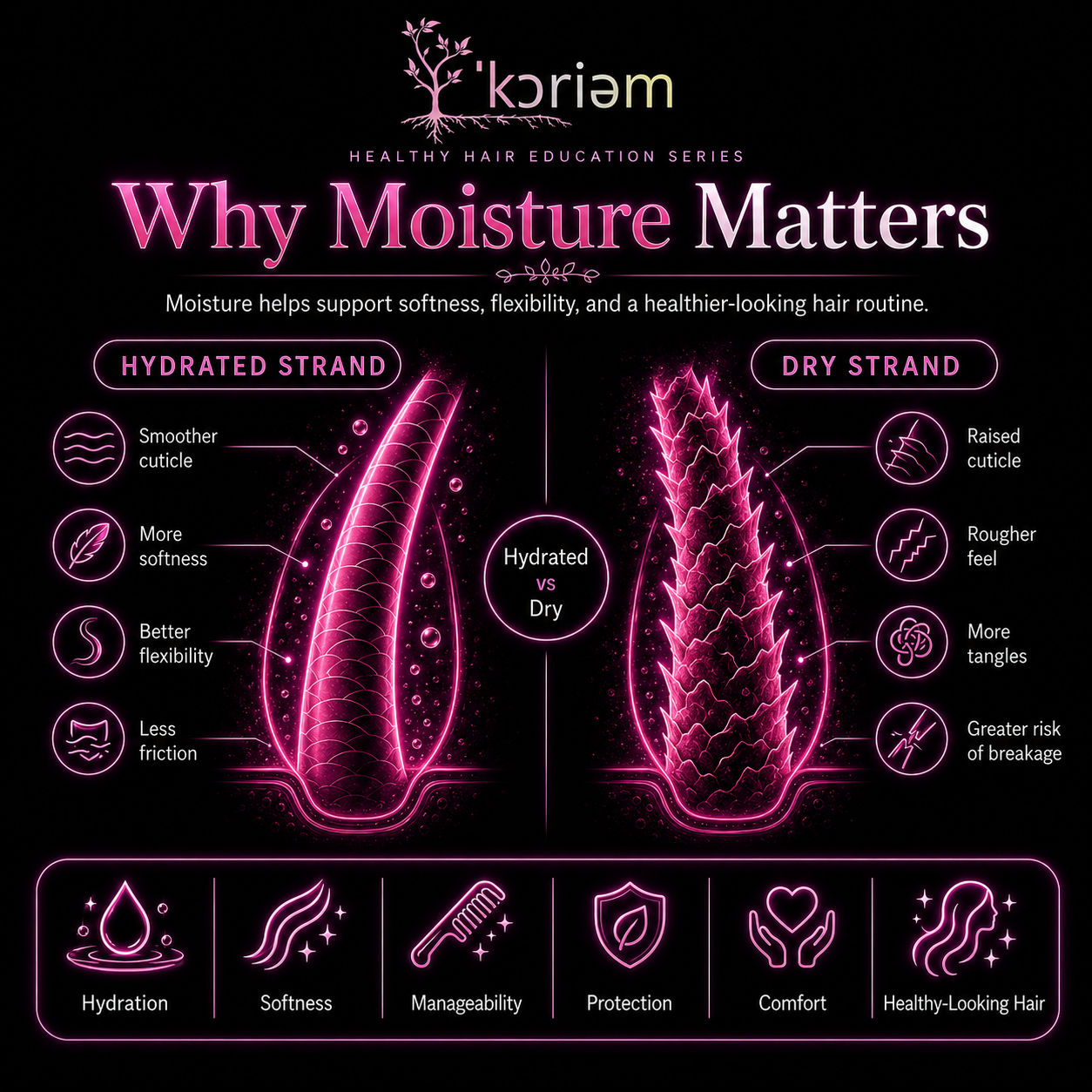
Why moisture matters
Moisture supports softness, flexibility, and manageability.
A smoother cuticle and well-conditioned strand can feel softer, bend with less resistance, and detangle more easily. Moisture does not repair every form of structural damage, but it can reduce the rough feel and friction associated with dryness.
Use conditioner primarily through mid-lengths and ends.
Balance hydration with protection from repeated moisture loss.
Choose product weight according to texture and porosity.
Original Koriem Healthy Hair Education Series artwork with the official logo treatment restored.
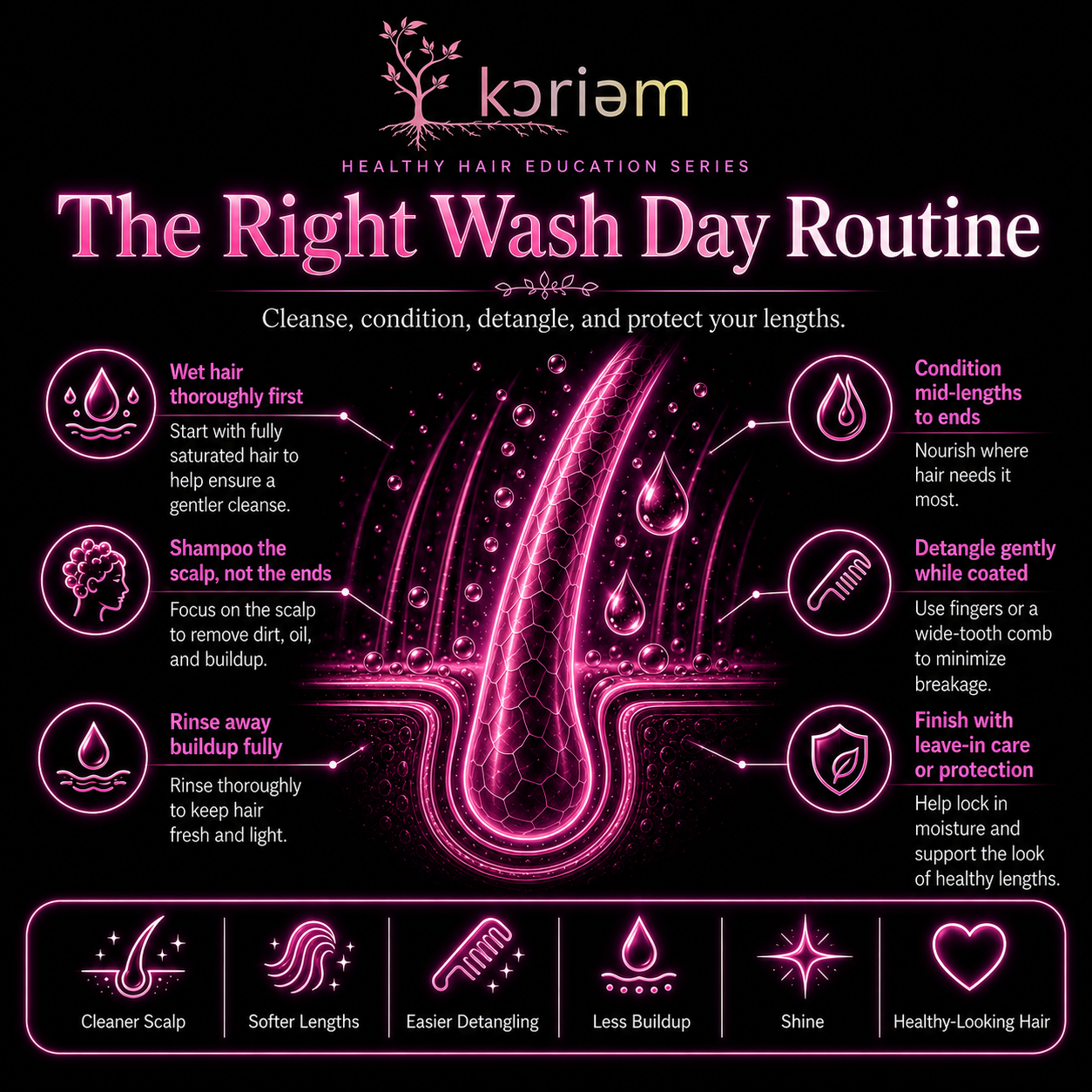
The right wash-day sequence
Cleanse, condition, detangle, and protect with purpose.
Start with fully saturated hair, focus shampoo on the scalp, and rinse buildup thoroughly. Apply conditioner where the lengths need softness, detangle gently while coated, and finish with leave-in care or protection that fits the style.
Shampoo the scalp rather than piling fragile ends on top of the head.
Use fingers or a wide-tooth tool while the hair has slip.
Finish with the least amount of heat and tension your style requires.
Original Koriem Healthy Hair Education Series artwork with the official logo treatment restored.
Chapter 03 · Understand inside-out support
Structural, nutritional, and routine support are not interchangeable.
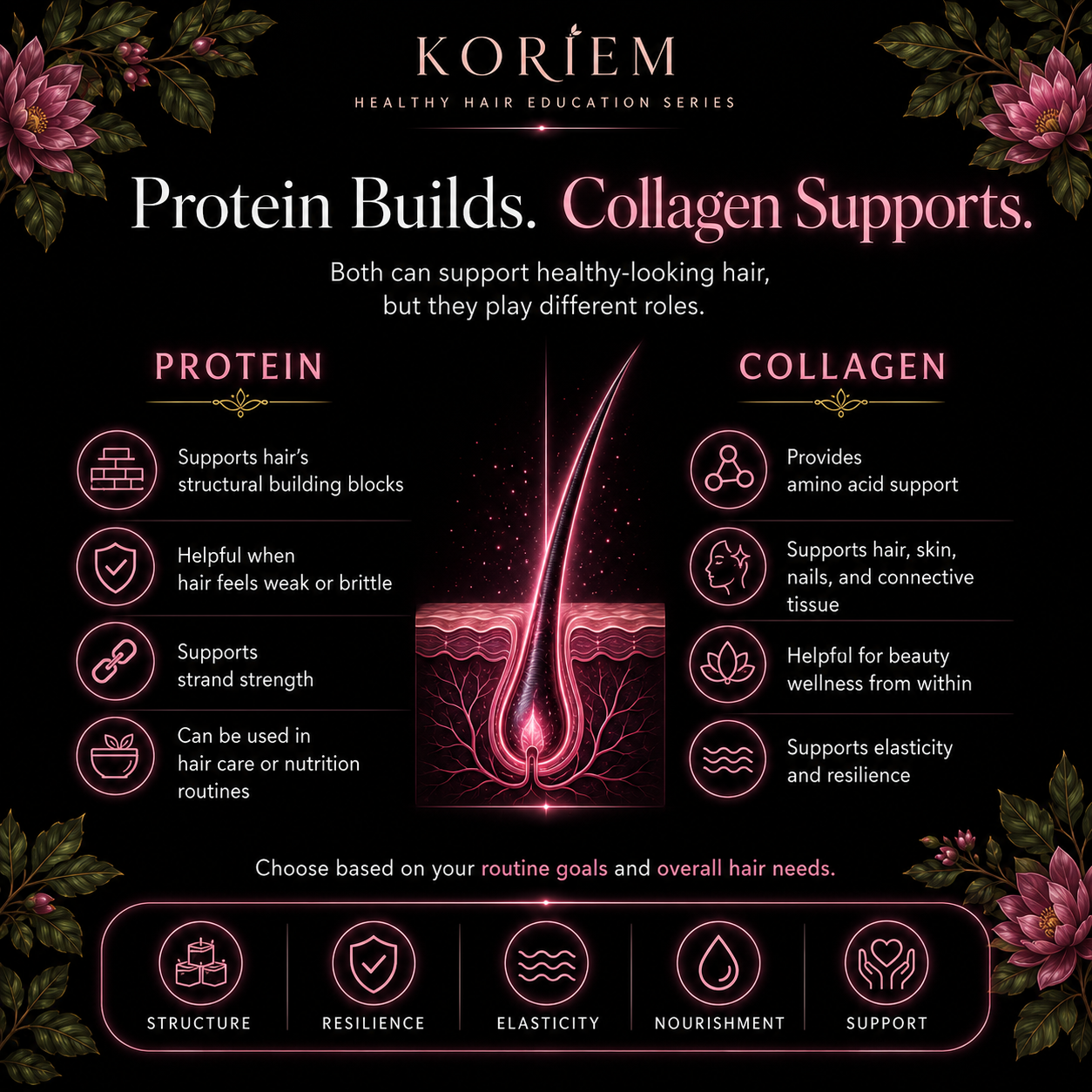
Protein + collagen
Protein builds. Collagen supports.
Hair is made primarily of keratin, a protein. Dietary protein provides amino acids used throughout the body. Collagen peptides provide a specific amino-acid profile and may fit a broader beauty-wellness routine, but they are not a substitute for adequate total nutrition or medical care.
Protein needs are individual and influenced by the whole diet.
Collagen is a supplemental amino-acid source, not a topical repair claim.
Choose based on dietary needs, allergens, and professional guidance.
Original Koriem Healthy Hair Education Series artwork with the official logo treatment restored.
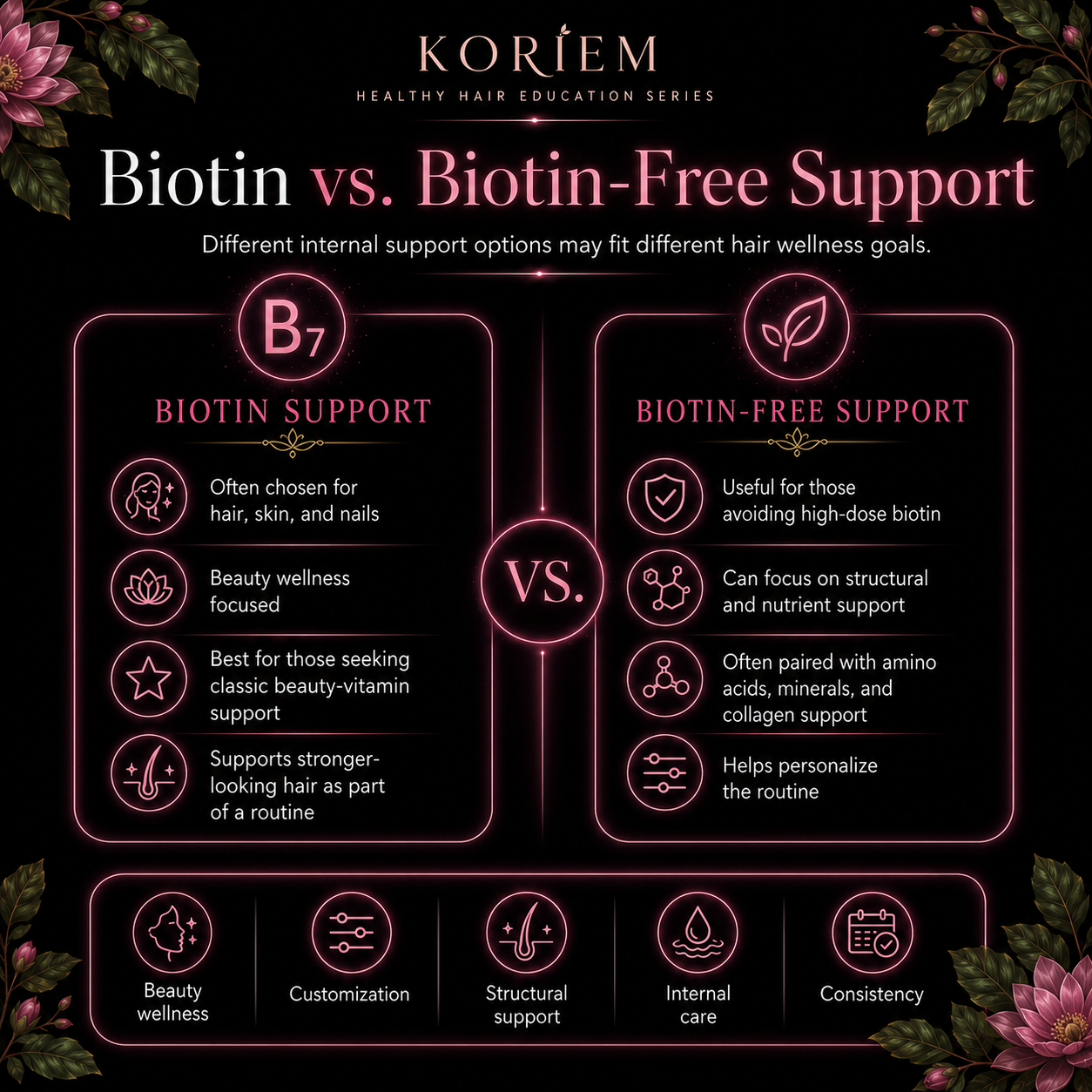
Biotin vs. biotin-free support
Different internal-support styles fit different needs.
Biotin is commonly included in beauty supplements, but more is not automatically better. Some customers intentionally choose biotin-free support. High-dose biotin can interfere with certain laboratory tests, so current labels and healthcare guidance matter.
Review the actual biotin amount rather than relying on the front label.
Tell healthcare and laboratory professionals about high-dose biotin use.
Use biotin-free formulas when they better fit your needs or guidance.
Original Koriem Healthy Hair Education Series artwork with the official logo treatment restored.
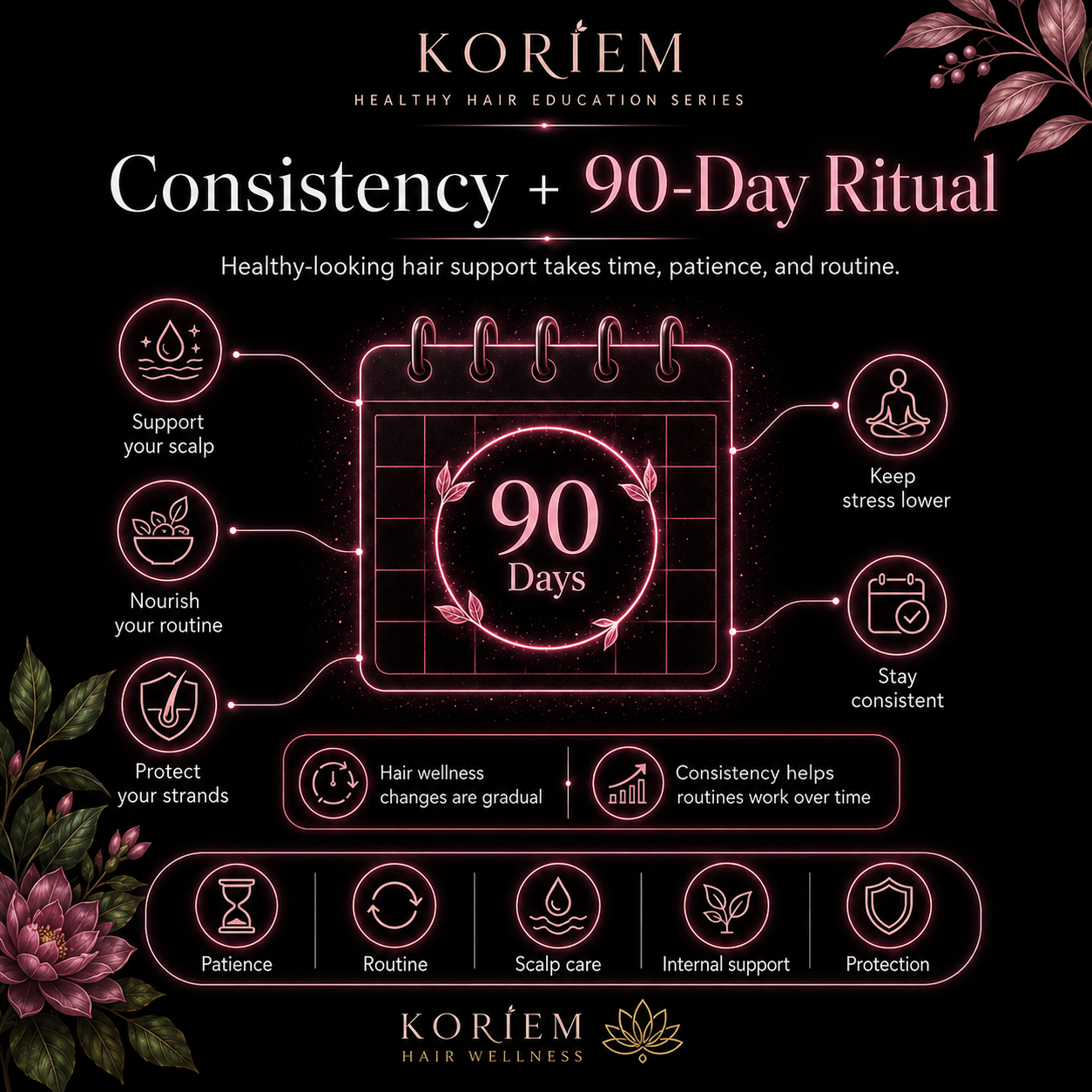
Consistency + a 90-day ritual
Use ninety days as an observation window—not a guarantee.
Hair wellness changes are gradual. A structured ninety-day routine can help you keep scalp care, wash day, gentle styling, and inside-out support consistent long enough to observe patterns without changing everything at once.
Choose a simple routine you can realistically repeat.
Track scalp comfort, breakage, manageability, and visible shedding.
Refine one variable at a time and seek help when concerns persist.
Original Koriem Healthy Hair Education Series artwork with the official logo treatment restored.
The Koriem approach
Understand first. Choose targeted support second.
Koriem connects scalp care, strand support, and beauty-from-within wellness without confusing their roles. The goal is a clearer product choice, a more intentional routine, and support that matches what you are actually trying to address.
For cosmetic and general wellness education only. This content is not medical advice, and Koriem products are not intended to diagnose, treat, cure, or prevent disease. Consult a qualified healthcare professional for sudden or persistent shedding, visible thinning, bald areas, scalp symptoms, suspected nutrient deficiency, hormonal concerns, medication interactions, pregnancy or nursing questions, or other health concerns. Individual results vary.